Rainwater harvesting systems should be our first line of defense against water shortage. The institution has the facility of natural rain water harvest structure and it was further developed to utilize the run-off water for purposes like gardening, feeding cattle in the surroundings, ground water recharge and for meeting certain amount of water requirement in the campus.
- Initially, the college was dependent on groundwater for its daily requirements but due to a decline in the groundwater table, in subsequent years, the natural recharge structures as well as artificial recharge structures have been developed within the campus for meeting the increasing demand for utilization of water in the campus.
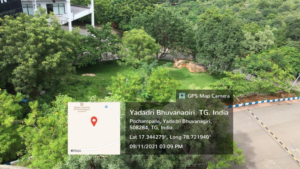
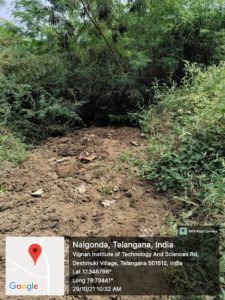
- Our campus has four water ponds which are interlinked and cover approx. 3 acres of land area. The total volume of water collected in the four ponds is approx. at an average of 20,000 cubic meters per annum. The water which is stored in these ponds is used to meet the daily requirements of water within the campus and also helps in recharging of 3 bore wells.
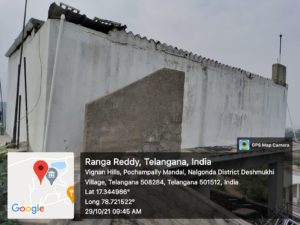
- All the volume of rainwater collected on the rooftop of the buildings is diverted to the ground level through a series of discharge pipes connected for this purpose.
- Rainwater harvesting is a cost effective solution to bridge the gap between water availability and demand which has been a successful initiative in this campus.

 Waste is collected and segregated in bins of two different colors every day. The waste is segregated into a recyclable and bio-degradable waste. The dry and wet waste is collected separately. The dry waste is collected in blue coloured bins and the wet waste is collected in green coloured bins. These bins are provided by the recyclers.
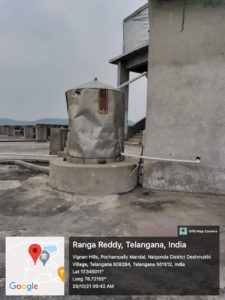
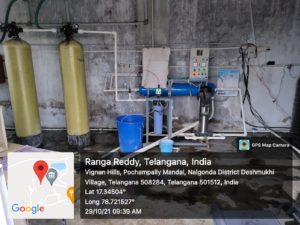
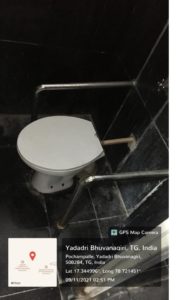
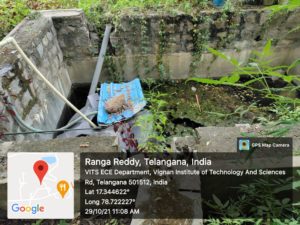 The wastewater generated from the reverse osmosis (RO) process is about 1500 liters per day which is directed to an overhead tank. It is used for meeting the partial requirement of water in washrooms.
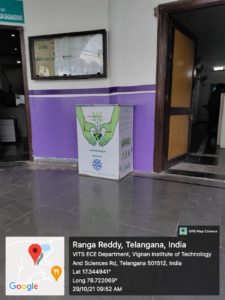 E-waste includes out dated systems, electronic components which are handed over to an authorized e-waste collector for proper disposal. Some of the electrical and electronic components are utilized in projects. They are also used as display models in class rooms The waste material that could not be used for any constructive purpose is given away to an authorized recycler.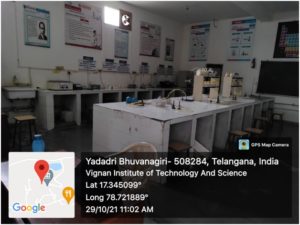
 Rainwater harvesting systems should be our first line of defense against water shortage. The institution has the facility of natural rain water harvest structure and it was further developed to utilize the run-off water for purposes like gardening, feeding cattle in the surroundings, ground water recharge and for meeting certain amount of water requirement in the campus.